

London broil cooks fairly quickly, which is why it's easy to accidentally overcook if you rely on timing alone.
Instead of watching the clock, I look for a few simple signals that tell me the meat is ready:
- Internal temperature
- Juices when slicing
- The way the meat feels when sliced
Because this is a lean cut of beef, paying attention to these cues helps keep the meat tender instead of dry.
One of the easiest ways to tell when London broil is done is by checking the internal temperature. If you're not sure what temperature range to look for, I walk through the ranges I use in my London broil internal temperature guide, including the medium-well doneness I prefer.
Jump to:
Start With a Meat Thermometer
The most reliable way to check doneness is with a digital meat thermometer.
For the way I prefer London broil, I usually cook it to about 145-150°F, which falls in the medium‑well range. That temperature gives me slices that are fully cooked while still staying tender and juicy.
If you want a deeper explanation of temperature ranges, see my London broil internal temperature guide.
Look for Clear Juices When Slicing
After the meat rests, I slice the London broil against the grain.
When it's cooked properly, you'll usually see clear juices on the cutting board rather than dark red liquid unless you're going for medium-rare. The slices should look moist and tender, not dry.
Notice the Color Difference Across the Meat
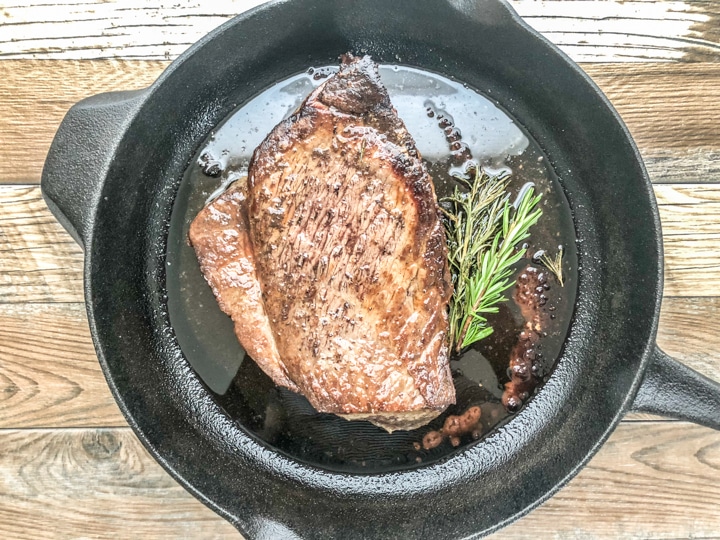
London broil isn't always perfectly even in thickness. One side of the cut is often slightly thicker than the other.
Because of this, the meat may not look the same across the entire cut. The outer edges usually appear a little darker, while thicker sections may still show a slightly lighter center. That variation is normal and doesn't necessarily mean the meat is undercooked.
Pay Attention to Texture
Another helpful sign is the way the meat slices.
When London broil is cooked properly and cut against the grain, the slices should feel tender rather than chewy.
If the slices feel tough, it's often due to overcooking or slicing with the grain rather than across it.
For a step‑by‑step explanation, see how to slice London broil against the grain.
Resting Helps Lock in Juices
After removing London broil from the oven, I let it rest uncovered for about 5-10 minutes before slicing.
Resting allows the juices to redistribute throughout the meat instead of running out when cut. This small step helps the meat stay moist when sliced.
Timing Still Matters
Even though doneness cues are important, timing still plays a role.
I finish my London broil in the oven for about 10-15 minutes at 400°F after searing, depending on thickness.
The cooking time is important in determining when London broil is ready to come out of the oven. If you're cooking at 400°F, you can refer to my London broil oven timing guide, which outlines how the thickness of the meat impacts cooking time.
If you'd like to see the full method I use, including the searing step and how I finish London broil in the oven, take a look at my oven-baked London broil recipe, where I walk through the entire process step-by-step.
Thanks for visiting! Please feel free to leave a comment