

Quick Answer: Cook a 3-lb tri-tip at 375°F for approximately 55 minutes until internal temperature reaches 145°F for medium-well. Sear fat-cap side first for 6-8 minutes, add beef broth and onions, then finish in oven. Rest 20 minutes before slicing against the grain. The key to juicy tri-tip is proper resting and slicing technique.
Tri-tip can be tricky. It's a lean cut, which means it cooks quickly and doesn't give you much room for error. But when you use the right oven temperature and pay attention to doneness, it turns out tender, flavorful, and perfect for slicing.
This is my simple 375°F oven method that keeps things straightforward without drying the meat out. Unlike tougher cuts that need hours of low-and-slow cooking, tri-tip benefits from proper resting and slicing against the grain. If you're looking for other easy beef recipes, check out my tender London broil recipe.
You can also explore my full beef collection here, where I break down everything from lean roasts to slow-braised classics.

Jump to:
Why Tri-Tip Can Be Tricky
Cooking tri-tip in the oven isn't difficult, but it's unforgiving if you miss a few key steps. It's a lean, triangular cut from the bottom sirloin, and that means:
- It dries out quickly if overcooked
- The grain changes direction mid-roast (and slicing it wrong will ruin the texture)
- It needs time to rest after roasting to retain its juices
This recipe keeps all that in mind.
Ingredient Notes
These are the ingredients you'll need.
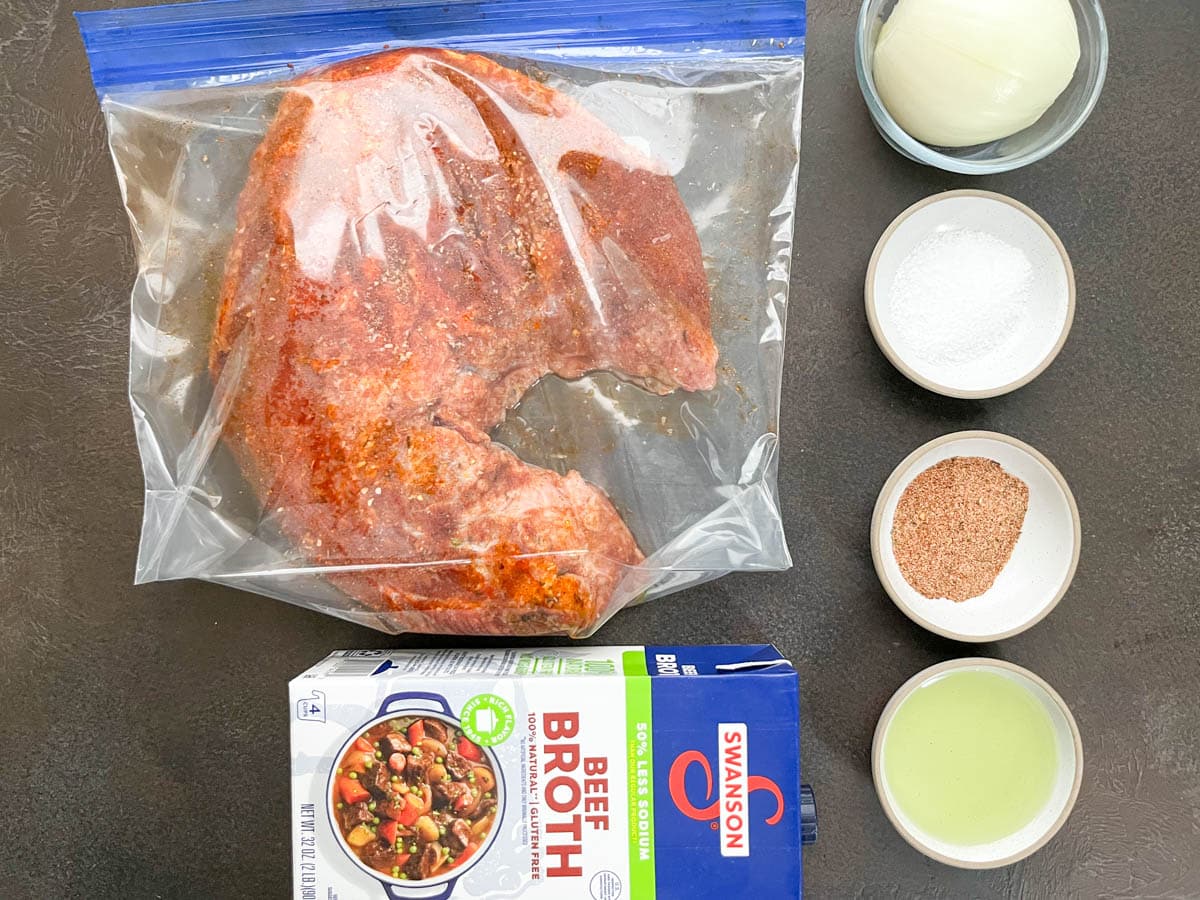
- Tri-tip: Look for one with a decent fat cap on one side; it'll help keep it juicy. If the fat layer is thick, trim it down slightly using a sharp chef's knife, but don't remove all of it.
- Cajun Seasoning: This roast gets all its flavor from my homemade Cajun seasoning; it's bold and smoky.
- Avocado Oil: Oil helps the seasoning adhere to the meat before searing. You could also use grapeseed oil or any neutral, high-smoke-point cooking oil.
- Onion (Optional but recommended): Tossing in roughly sliced onion adds more flavor to the pan juices.
- Pro-tip: Leaving the fat cap intact naturally bastes the meat, making your tri-tip even more juicy and tender.
Refer to the recipe card below for quantities.
Tri-tip Doneness Guide with Internal Temps
You can insert an oven-safe meat thermometer into the thickest part of the meat before putting the roast in the oven to avoid opening the door while it's cooking.
Or, you can use a regular meat thermometer and follow the simple guide below for your desired doneness.
- 125°F: Rare
- 130-135°F: Medium-Rare
- 140°F: Medium
Keep in mind that the roast can rise 5 degrees while resting.
My Top Tips
- Before searing, pat your tri-tip dry with clean paper towels, so it's completely dry; this will help achieve a nice sear.
- If you don't have a meat thermometer, I highly recommend investing in one. It takes the guesswork out of determining if your meat is cooked perfectly.
- To check the internal temperature, insert the meat thermometer into the thickest part of the tri-tip. This helps avoid overcooking. For other meat-cooking methods, see my complete beef doneness guide.
- I like to cook the tri-tip to medium-well, but if someone prefers it more done, you can always return a few slices to the oven or a frying pan to cook them a little longer.
- Spoon some of the flavorful pan juices over the tri-tip for added moisture and flavor.
- Finally, let your tri-tip rest for a few minutes before slicing to retain its juices and tender texture.
Instructions (Brief Overview)
Here's how to cook tri-tip perfectly in the oven.
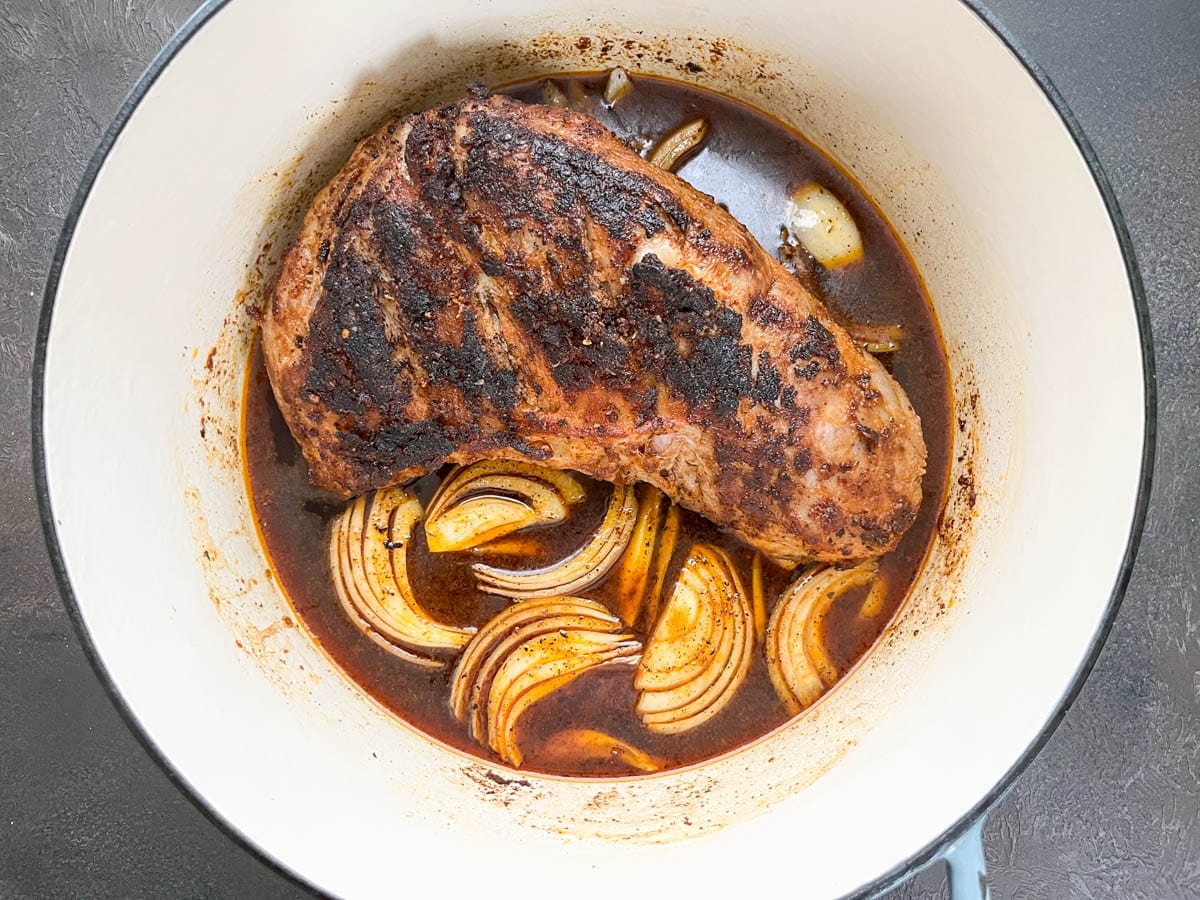
- After marinating the tri-tip for at least 1 hour (or up to 24), let it come to room temperature, and sear your tri-tip roast in a hot Dutch oven or oven-safe skillet until nicely browned. Be sure to sear the fat-cap side first.
- Pour in the beef broth and toss in the sliced onion.
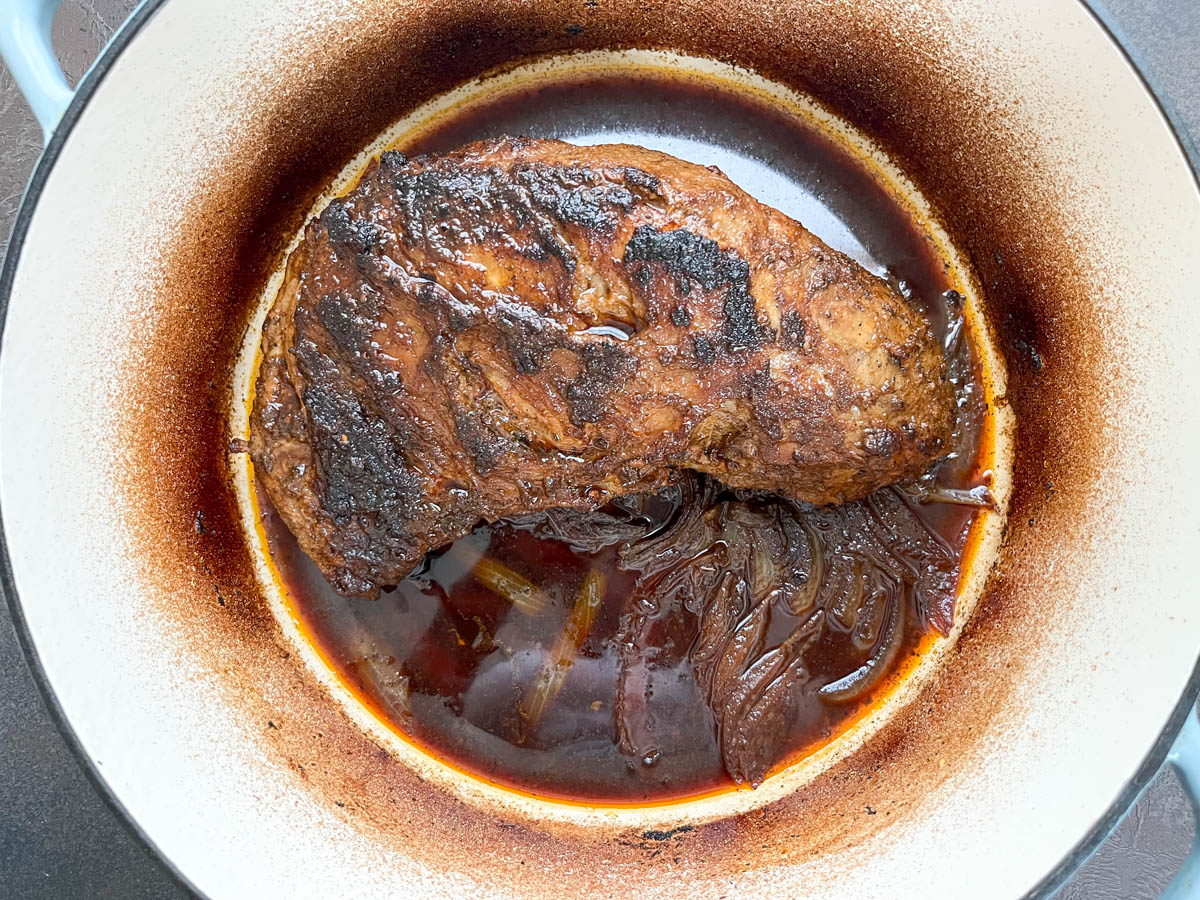
- Pop it in the oven and cook until it reaches the internal temperature that matches how you like your beef.
How to Slice It The Right Way
The grain runs in two directions, which is why slicing it wrong can ruin the texture.
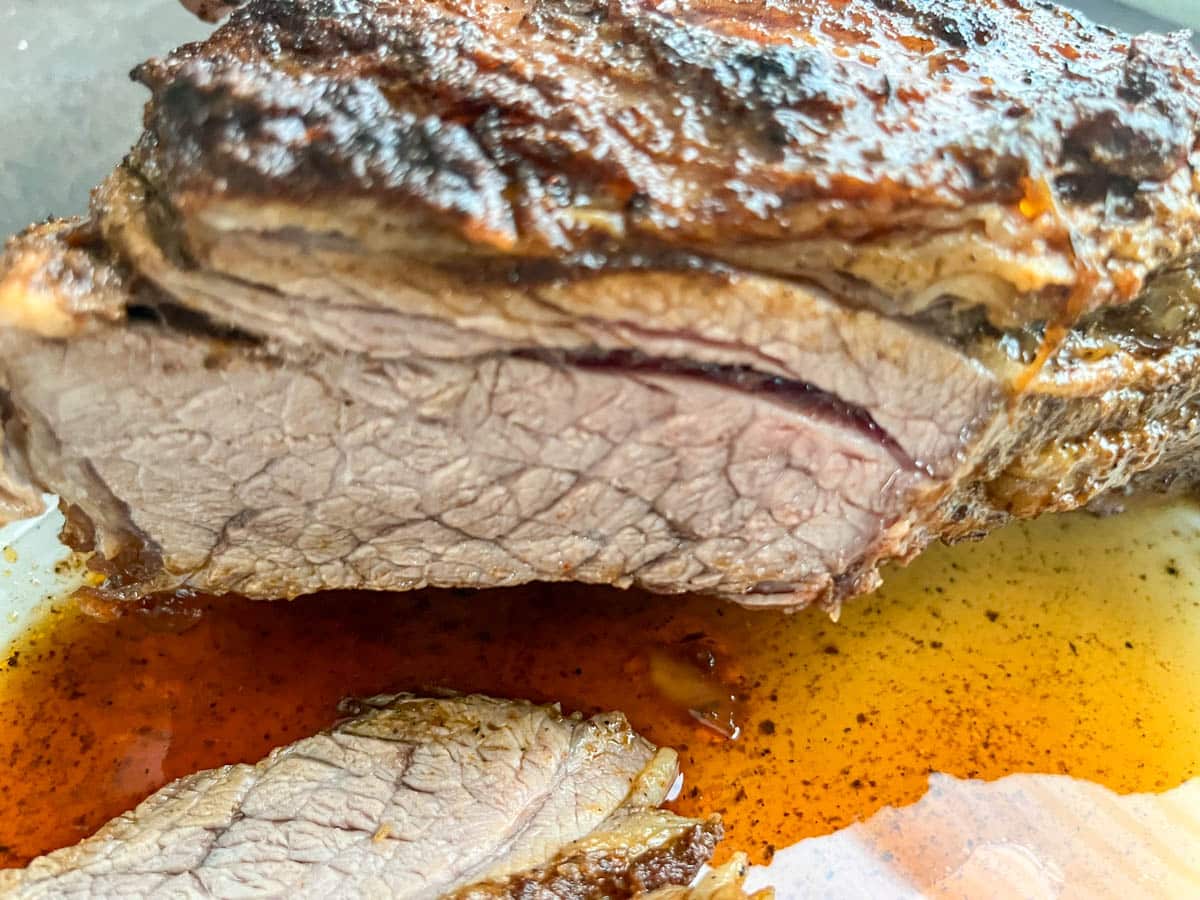
Here's how to get it right:
- After resting, find the spot where the grain shifts.
- Cut the roast in half at that point.
- Slice each half against the grain, into thin slices.
Alternatively, you can watch where the grain changes direction and slice thinly against the grain (perpendicular to it) without cutting the tri-tip in half. This method also keeps each bite tender.
Serving Suggestion
Serve it alongside Southern collard greens that have been cooked low and slow until tender. If you're leaning into comfort, creamy baked mac and cheese makes this feel like a full Sunday dinner spread. Or, for something with a little sweetness add a side of Southern fried corn. It brings color, flavor, and that familiar Southern table feel that turns a simple roast into a complete dinner.
FAQs
For this recipe, 375 degrees F is used.
In my opinion, tri-tip shouldn't be baked at a high temperature unless you're using the last couple of minutes to broil to create a nice brown crust.
More importantly, use an instant-read meat thermometer to ensure that the internal temperature of your tri-tip is cooked the way you like it:
135 degrees F (Rare)
140 degrees F (Medium-rare)
145 degrees (Medium-well to well done)
Cooking time will depend on the size and thickness of your tri-tip. I recommend using a reliable instant-read meat thermometer to check that your tri-tip is cooked the way you like it. As a general guideline, you can estimate the cooking time for a medium-well tri-tip in a 375-degree preheated oven to be approximately 55 minutes.
Store and Reheat
Storage: Store in an airtight container with a tight-fitting lid or a ziploc bag and place in the fridge for up to 3 days.
Reheat: To reheat, preheat your oven to 375°F. While the oven warms up, place the leftover tri-tip on a baking sheet lined with foil. Heat in the oven until warmed throughout, but be sure not to overcook it, as this can cause the meat to dry out.
Or, warm the slices gently in a covered skillet with a splash of broth, water, or a few teaspoons of butter.
📖 Recipe
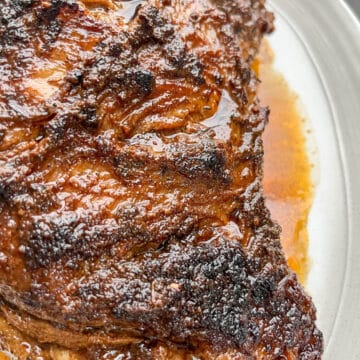
How to Cook Tri-Tip in the Oven (375°F Method That Works)
How to Cook Tri-Tip in the Oven (375°F Method That Works)Equipment
- Dutch Oven
- Chef's knife to cut away some of the fat cap and for slicing onion
- Measuring spoons
- measuring cup
- Paper towels to pat dry tri-tip
Ingredients
- 3 lb tri-tip
- 2 tablespoon Cajun Seasoning
- 1 tablespoon kosher salt (Salt generously unless you follow a low-sodium diet)
- 2 teaspoon Better Than Bouillon Roasted Beef Base (Reduced Sodium) (Or Better Than Bouillon Roasted Chicken Base (Reduced Sodium), or beef or chicken broth or stock)
- 1 tablespoon avocado oil (Or Grapeseed oil to rub on the tri-tip, so the seasoning sticks to it)
- 2 tablespoon avocado oil (Or Grapeseed oil for searing)
Instructions
- Wash the tri-tip and pat it dry with clean paper towels to absorb any moisture. Rub cooking oil over the entire surface of the meat. Season it using my homemade Cajun seasoning and kosher salt. Gently press the seasoning into the meat using your hand. Then, place it in a medium-sized Ziploc bag to marinate in the fridge for 1 hour or overnight.
- After marinating, remove it from the fridge and place it on the countertop, so it comes to room temperature. Meanwhile, preheat the oven to 375 degrees F.
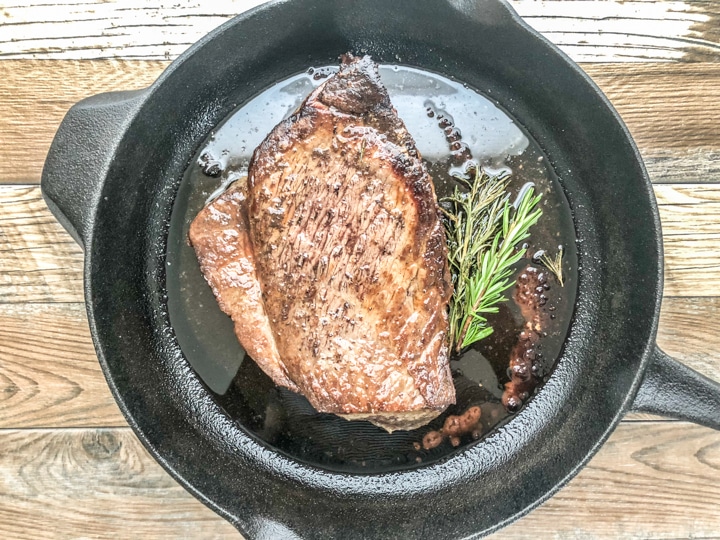
- Place a Dutch oven on the stovetop over medium-high heat. Drizzle some oil into the pot. When the oil is hot, place the tri-tip into the pot with the fat-cap side down. Sear for 6 to 8 minutes or until the fat cap is caramelized. Then, flip to sear the other side until caramelized to a beautiful brown color.
- Meanwhile, put 2 teaspoons of the 'Better Than Bouillon into a measuring cup, then add in 2 cups of water and stir or whisk until combined. Set aside. Roughly slice an onion and set aside.
- Pour in the 'Better Than Bouillon' Mixture and toss in the sliced onion. Pop it into the oven to bake (Remember the fat cap side up). Start basting the tri-tip with the pan juices around the 30-minute mark throughout the cooking process.
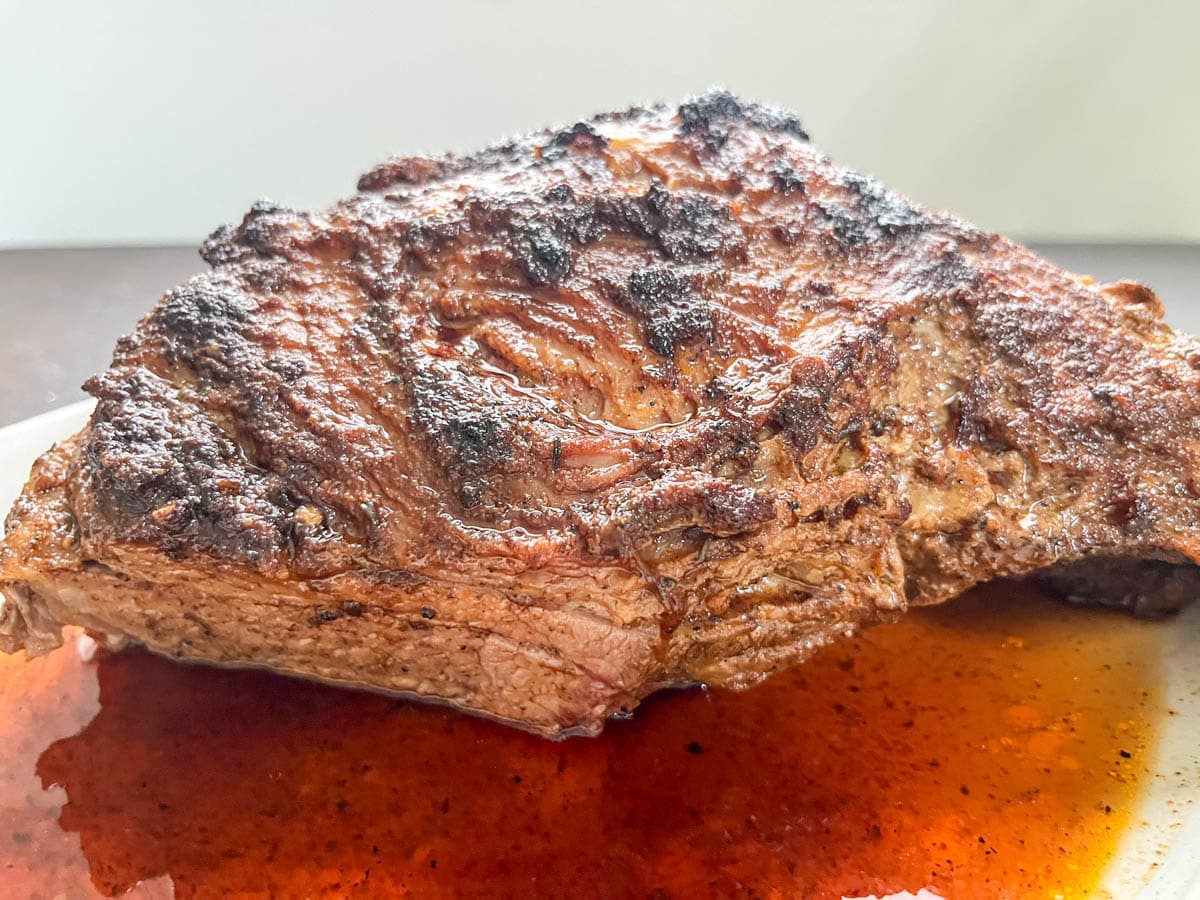
- Check the internal temperature by inserting a meat thermometer into the thickest part. When it has reached your desired internal temperature, remove it from the oven and baste a few times with pan juices. As a reference, the internal temperature in the photos is 145 degrees F.
- Allow the tri-tip to rest for at least 20 minutes for juices to redistribute. Then, thinly slice the tri-tip against the grain (i.e., perpendicular). Pay close attention to how the grains may switch before slicing. Serve with your favorite sides.
Notes
-
- Before searing, pat your tri-tip dry with clean paper towels, so it's completely dry-this will help achieve a nice sear.
-
- If you don't have a meat thermometer, I highly recommend investing in one. It takes the guesswork out of determining if your meat is cooked perfectly.
-
- To check the internal temperature, insert the meat thermometer into the thickest part of the tri-tip. This helps avoid overcooking.
-
- Cook the tri-tip to medium-well, but if someone prefers it more done, you can always return a few slices to the oven or a frying pan to cook them a little longer.
-
- Spoon some of the flavorful pan juices over the tri-tip for added moisture and flavor.
-
- Finally, let your oven tri-tip rest for a few minutes before slicing to retain its juices and tender texture.
- After resting, find the spot where the grain shifts.
- Cut the roast in half at that point.
- Slice each half against the grain, into thin slices.
Nutrition
Nutrition Disclaimer
Nutritional information is an estimate provided by an online nutrition calculator. For the most accurate results, we recommend calculating the nutritional information using the specific ingredients and brands you use.

Kathy says
Hello Cree,
Tomorrow I'm going to try your recipe for the Tri-Tip roast. (it's frozen right now)
It's a 5 1/2 pound roast, and I was wondering how long should I bake it after I sear it first, and at what temp? (my family does not like bloody meat) I don't have a meat thermometer and never really had a need for one as I bake on lower temps for longer period of time for tenderness.
Thank you Cree!!!
Kathy
Sheryl mccry says
I'm about to get intonit, wish me luck okkrrr lol
CookingwithBliss says
Hey Sheryl - How did it go? I bet you crushed it.
Debi says
perfect. this is a keeper.
CookingwithBliss says
Hey Debi - Thanks so much. Let me know how it turns out. I think you're going to love it.